What you actually want to know about Himara weather is not the annual average — it's whether the sea will be swimmable in the specific week you're booking, whether the rain will spoil two of your three days, and whether the wind will collapse the boat-tour plan. The annual numbers (mean air 20°C, mean sea 18°C, swimming season June-November) hide more than they reveal. Below is the month-by-month table that the rest of this guide builds on, then the opinionated section on which months are genuinely worth flying for, which are worth flying for if you're flexible, and which we'd actively steer most travelers away from. Each month also has a dedicated deep-dive guide — the table links across to all twelve.
Month-by-Month Climate Table (4-Column Format)
The single most useful chart for planning. Source: site primary observation cross-referenced with WeatherSpark and seatemperature.info.
| Month | Avg high / low | Sea temp | Rainy days | Our one-line take |
|---|---|---|---|---|
| January | 12°C / 4°C | 15°C | 11 | Cold, wet, quiet. Cafés open, beaches empty. See Himara in January. |
| February | 12°C / 4°C | 14.8°C (year-low) | 10 | Wettest stretch. Hike-only travel; no swimming. Himara in February. |
| March | 14°C / 6°C | 15°C | 9 | First spring warmth; orange blossom; almost no tourists. Himara in March. |
| April | 17°C / 9°C | 16°C | 8 | Pleasant for hiking + culture; sea still cold. Himara in April. |
| May | 22°C / 13°C | 18°C | 6 | Shoulder sweet spot starts; first swims for the brave. Himara in May. |
| June | 27°C / 17°C | 22°C | 4 | Swimmable, mostly uncrowded, sunny. Our pick if you want one month. Himara in June. |
| July | 31°C / 20°C | 24°C | 2 | Peak heat + peak crowds + peak prices. Hot Albanian summer in full effect. Himara in July. |
| August | 28-31°C | 25.5°C (year-high) | 2 | Warmest sea of the year; absolute peak season. Himara in August. |
| September | 26°C / 17°C | 24°C | 4 | Best shoulder month. Warm sea, thinning crowds, falling prices. Himara in September. |
| October | 22°C / 14°C | 22°C | 6 | Last comfortable swim window. Beach clubs winding down. Himara in October. |
| November | 17°C / 10°C | 19°C | 9 | Sea still 19°C but cool air; rain returns. Himara in November. |
| December | 13°C / 6°C | 17°C | 11 | Off-season. Quiet. Cold-but-not-freezing. Himara in December. |
For the consolidated cold-season view (Nov-Mar), see Himara in winter.
The Decision Section: Which Month to Actually Book
The forum advice ("June or September") is correct but generic. The decision below depends on what you specifically care about.
For warm sea above everything else → August, then July, then September. Sea temp peaks at 25.5°C in August and stays above 24°C from late June through early October. If your trip will fail unless you can swim comfortably for two hours at a time, you need water at 22°C+ — that's mid-June to mid-October only.
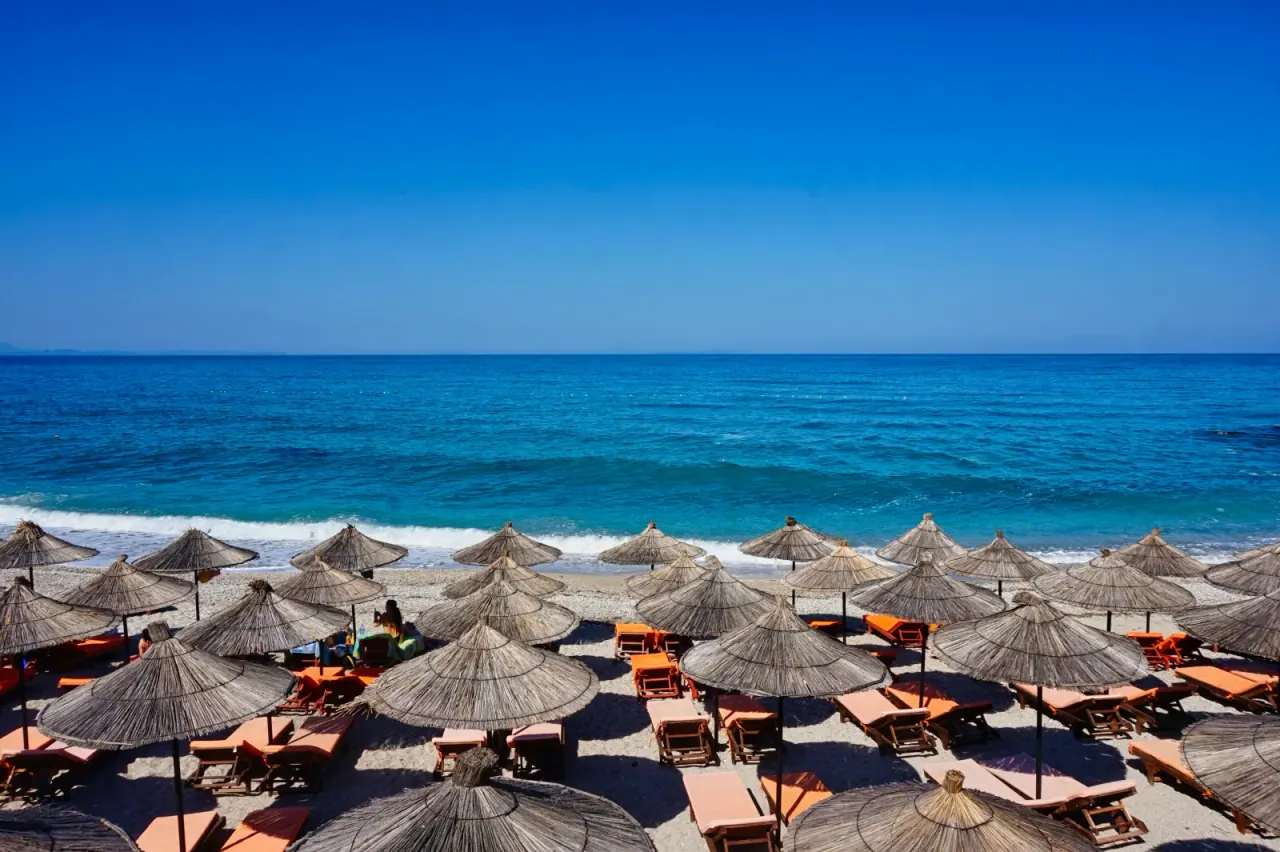
For empty beaches without sacrificing sea temperature → June first half or September second half. Sea is 22-24°C; crowds are 40-60% of peak. This is what we book ourselves.
For lowest prices without freezing → late May or October. Sea is 18-22°C (brave-only for swimming), hotels are 30-50% off peak, restaurants have free tables. Hiking weather is excellent.
For hiking, culture, and old-town photography (not beach) → April or October. Comfortable air temps, dramatic light, off-season prices. The Llogara Pass viewpoints are at their best in April when the snowline is still visible above 1000m.
For "I just want sun and won't swim much" → any month May through October works. Sun hours are reliable; rain is uncommon May-September.
Months we'd steer most travelers away from: February (highest rain, coldest sea, almost everything closed), and arguably January for the same reason but with marginally less rain.
Sea Temperature — The Number Most Travelers Get Wrong
People assume Albania's sea is Mediterranean-warm year-round because the Ionian is the same body of water as Greece and southern Italy. It is, but Himara's bay is open to deep water with limited shallow shelf, so it heats up slowly in spring and cools slowly in autumn:
- April: 16°C — too cold for casual swimming. Locals don't. Wetsuit-only for any extended water time.
- May: 18°C — brief dunks, brave swimmers only. Boat-tour swimming stops feel sharp.
- June: 22°C — first month most travelers find genuinely swimmable.
- July: 24°C — comfortable for long swims.
- August: 25.5°C — peak. Indistinguishable from Greek-island summer water.
- September: 24°C — equal to July. The single most underrated month.
- October: 22°C — still swimmable but the cooler air makes the contrast feel sharper coming out.
- November onward: 19°C and dropping. Off-season.
The swimming season runs June through November if you count "20°C and above" as the threshold. If you count "feels good getting out of the water in the wind" as the threshold, it's mid-June to late September.
Wind & Sea Conditions for Boat Tours
The boat-tour reliability question gets asked more than the rain question. Honest answer: the Albanian Riviera summer wind pattern is morning calm, afternoon breeze — exactly the pattern that makes morning departures more reliable than afternoon ones.
- May, October: wind days are more common; boat-tour cancellations happen 1-2 days in a typical week.
- June, September: wind days drop to roughly 1 per 10 days.
- July, August: flat-calm mornings nearly every day; afternoon onshore breeze picks up after 14:00.
If a boat tour is the centerpiece of your trip, book a morning departure (8:30-10:00 most operators) and accept that the afternoon will be windier. Operators routinely move tours from afternoon to next-morning when wind picks up — don't take it personally.
Rainfall Pattern — Two Wet Seasons
Himara's rain falls in two windows: November-February (the heavy stretch, when locals say "it doesn't rain — it falls") and a brief secondary peak in late October. May through September are reliably dry; you can plan beach days without contingency. The annual rainfall total (~1,300mm) is higher than Athens or Rome, but it's compressed into the winter half — June-August can pass with zero rain at all.
When the Heat Becomes a Problem
July and August daytime highs of 31°C combined with sea-level humidity make midday exertion miserable for most northern-European and US-northeastern visitors. The local rhythm — late breakfast, beach until 13:00, long lunch and siesta until 17:00, walk and dinner from 19:00 onward — is the only sustainable pattern in those months. If your travel style is "see everything, all day, no breaks," July-August Himara will defeat you. April-June and September-October are the months when northern-European pacing works without modification.
For US travelers: Convert quickly — August water at 25.5°C is 78°F. July air at 31°C is 88°F. Summer feels like the Carolinas or coastal Georgia. Off-season (Jan-Feb) at 12°C is 54°F — Pacific Northwest winter, not New England. Rain in November-February is steady rather than dramatic; expect grey-day pattern, not big storms.
For UK travelers: Albanian Riviera in May, September, and October hits the temperature range UK travelers describe as "actually warm" (low-to-mid 20s) without the July-August heat that's now common in the Mediterranean. This is the strongest market-fit window for UK visitors — book May or September if you can.
For German / Dutch / Nordic travelers: Summer high season (June-September) provides reliable sun. April and October hover at "Mediterranean spring" temperatures rather than "Northern-European summer" — manage expectations. The light quality in shoulder months is the differentiator vs. peak.
How Local Geography Bends the Forecast
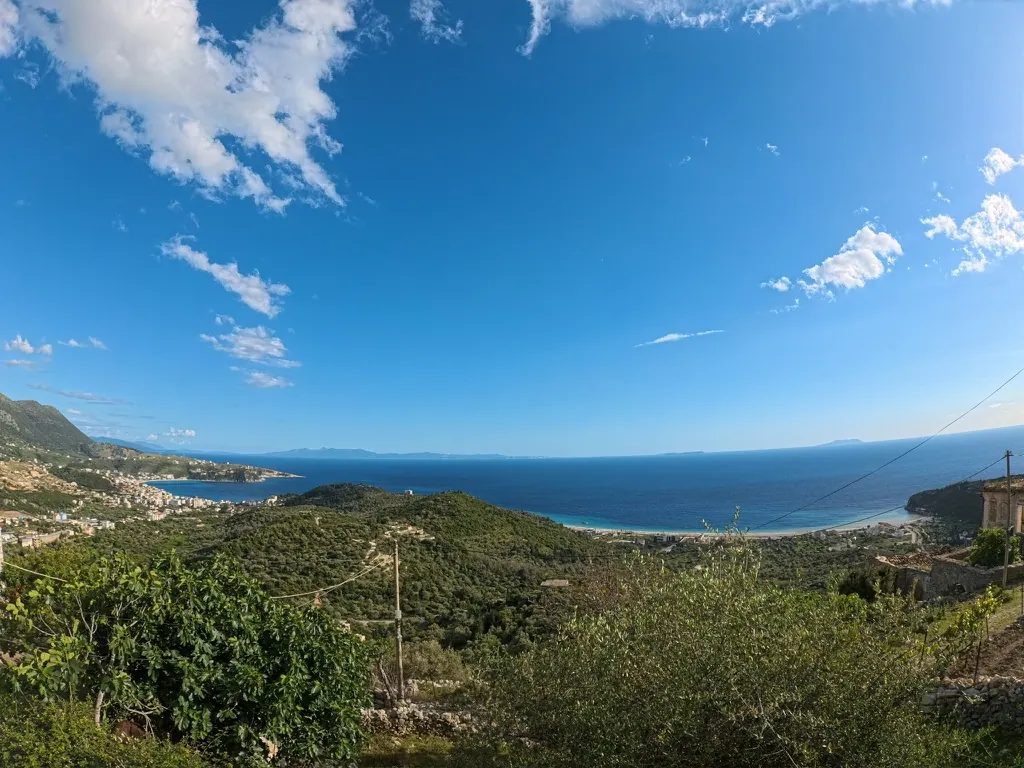
Three micro-climates inside the Himara area worth knowing:
- Llogara Pass (1,027m elevation): can be 10°C colder than sea-level Himara any day of the year, and is occasionally snow-closed in winter. Pack a layer for any tunnel-or-pass crossing November-April.
- Coastal Himara (sea level): the warmest, most reliable spot.
- Upper Qeparo / Vuno (450m elevation): 4-6°C cooler than the coast. Pleasant in July-August when the coast bakes; chilly in evenings April-October.
Wind direction matters too. The dominant summer afternoon wind is onshore (sea→land), which keeps the beach cool but makes morning the right time for water activities. The winter wind shifts to offshore — drier but colder.
FAQ
When is the sea in Himara warmest?
August, at 25.5°C average. Late July through mid-September is the comfortable-swimming window for most travelers. The sea stays above 22°C from mid-June through early October — that's the "swimming season" most operators use.
Does it rain in Himara in summer?
Rarely. July and August average 2 rainy days each. June and September average 4. May has 6. The dry-season window is roughly mid-May to mid-October. Outside that window, expect Mediterranean rain — not heavy storms, but steady grey-day patterns.
Is Himara cold in winter?
Mild by Northern European standards. Daytime highs in January-February are 12°C (54°F); overnight lows around 4°C (39°F). Snow on the coast is extremely rare; snow on Llogara Pass is common December-March. The cold-season problem isn't temperature — it's that most tourist businesses close.
What's the best month to visit Himara for good weather and no crowds?
September — first half especially. Sea temperature equal to July (24°C), air temperatures 26°C, daily sun, and 40-50% fewer visitors than August peak. Hotel prices drop ~30% from peak by mid-September. Our pick if we could only recommend one month.
Is there a Himara wind season?
Yes. May and October have the most variable wind, with afternoon gusts that can cancel boat tours. June-September is the calm-morning, breezy-afternoon pattern. The Riviera doesn't have a Greek-style summer meltemi — wind is local thermal rather than synoptic.
Bottom Line
Book June first half or September second half for the best balance of warm sea, low crowds, and good prices. Book August if warm-sea swimming is non-negotiable. Avoid February. Everything else is a tradeoff you can make once you know which of your trip goals is load-bearing. Use the month-specific guides linked in the table above for the per-month opinion piece on what's open, what's closed, and what to wear.